
Staring at a bank statement filled with interest charges can feel like trying to solve a puzzle with missing pieces. You know money is leaving your account, but the exact mechanics behind that number often remain a mystery. Understanding how to calculate monthly debt payment is not just about satisfying curiosity; it is the single most effective way to take control of your financial health and prevent interest from eroding your savings. When you grasp the underlying math, you stop reacting to bills and start planning for long-term stability.
Quick Takeaway: To find your monthly payment, use the standard amortization formula: $M = P \frac{r(1+r)^n}{(1+r)^n – 1}$, where P is the principal, r is the monthly interest rate, and n is the total number of payments. This precise figure allows you to budget accurately and track your progress toward becoming debt-free.
By the end of this guide, you will move beyond guesswork. You will learn to decode loan terms, utilize calculation tools effectively, and manage multiple obligations with confidence, ensuring every dollar you pay works harder to reduce your principal rather than feeding the interest.
Understanding the Core Components of Debt
Before you can accurately determine your monthly obligation, you must dissect the fundamental elements that make up a loan. These components interact dynamically to define your total cost of borrowing. Understanding them is the first step in mastering your debt-to-income ratio.
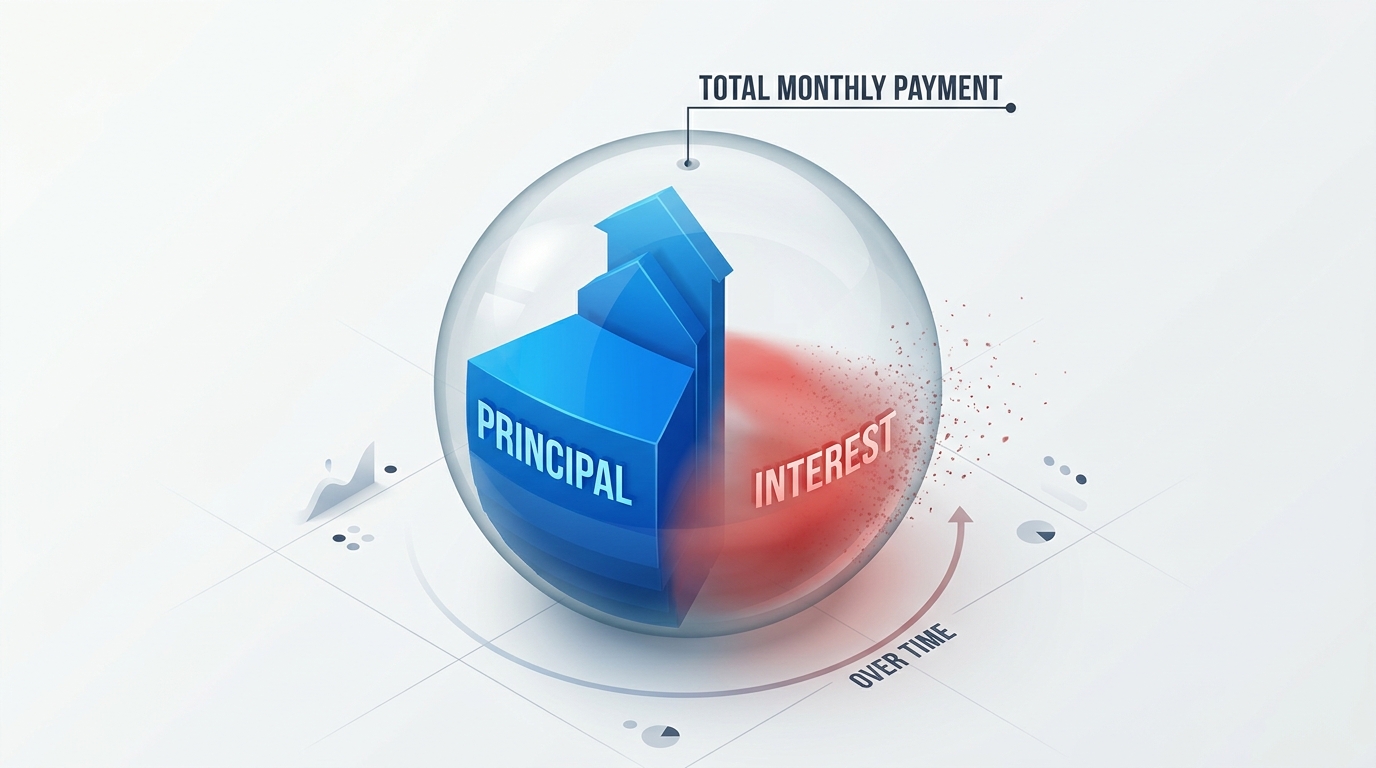
Principal vs. Interest Breakdown
The principal is the original amount of money you borrowed from the lender. It represents the core value of the loan without any additional charges. Over time, this amount decreases as you make payments.
Interest is the fee you pay for using the lender’s money. It is typically expressed as an annual percentage rate (APR). This cost compensates the lender for the risk of lending to you.
In most standard loans, your monthly payment covers both parts. Initially, a larger portion of your payment goes toward interest. As the principal balance drops, more of your payment reduces the principal itself. This shift is a key feature of an amortization schedule.
| Component | Definition | Impact on Payment |
|---|---|---|
| Principal | The original loan amount | Decreases over time |
| Interest | The cost of borrowing | Varies based on remaining balance |
Fixed vs. Variable Rates
Interest rates are not static; they can be structured in different ways that affect your budget. A fixed rate loan maintains the same interest rate for the entire duration of the loan. This provides stability and predictability for your monthly obligations.
In contrast, variable rates fluctuate based on market conditions, such as the Federal Reserve’s benchmark rate. While these rates may start lower, they carry the risk of increasing over time. This variability makes long-term budgeting more challenging and uncertain.
Choosing between these two options depends heavily on your risk tolerance and how long you plan to hold the debt. For most consumers, the predictability of a fixed rate often outweighs the potential initial savings of a variable rate.
Amortizing vs. Interest-Only Loans
Not all loans reduce the principal balance simultaneously with the interest. An amortizing loan requires payments that cover both interest and principal. This structure ensures the loan is fully paid off by the end of the term.
An interest-only loan allows you to pay only the interest portion for a set period. During this phase, the principal balance remains unchanged. Once the interest-only period ends, payments often increase significantly to cover the remaining principal.
Pro Tip: Always check if your loan has an interest-only period. If it does, build your loan repayment plan based on the higher post-interest payments, not the initial lower ones. This prevents a sudden financial shock later on.
Misunderstanding these distinctions can lead to inaccurate budgeting. Knowing whether your debt is amortizing or interest-only helps you plan for the true total cost. It also clarifies how your interest rate calculation evolves over time.
By identifying these core components, you lay the groundwork for precise calculations. This knowledge ensures your financial forecasts reflect reality, not just the initial teaser rates.
The Standard Formula for Monthly Payments
To understand how to calculate monthly debt payment accurately, you must master the standard amortization formula. This mathematical model is the backbone of most fixed rate loan structures in the financial world. It ensures that lenders and borrowers share a transparent view of the repayment process.
The formula divides the principal and interest into equal monthly installments over the life of the loan.
\[ M = P \frac{r(1+r)^n}{(1+r)^n – 1} \]
Here, \( M \) represents the total monthly payment. \( P \) is the original loan principal. \( r \) is the monthly interest rate. \( n \) is the total number of payments.
Step-by-Step Calculation Method
Breaking down the variables makes the interest rate calculation intuitive and manageable. Follow these precise steps to derive your figure.
-
- Identify the Principal (P): Start with the initial amount borrowed. This is the base figure for your loan repayment plan.
- Convert Annual Rate to Monthly (r): Divide the annual percentage rate (APR) by 12. For example, a 6% annual rate becomes 0.5% (0.005) monthly.
- Count the Total Payments (n): Multiply the loan term in years by 12. A 30-year mortgage has 360 total payments.
- Apply the Exponent: Calculate \( (1+r)^n \) first. This step adjusts for the compounding effect of interest over time.
- Finalize the Division: Complete the remaining operations to solve for \( M \).
This method provides the exact figure required for your amortization schedule. It removes guesswork from budgeting.
| Variable | Symbol | Example Value | Description |
|---|---|---|---|
| Principal | P | $200,000 | Total loan amount |
| Monthly Rate | r | 0.005 | 6% annual / 12 |
| Number of Payments | n | 360 | 30 years x 12 |
Understanding this structure is critical for long-term financial health. It allows you to see how much of each payment goes toward interest versus principal.
Pro Tip: Always round your final monthly payment up to the nearest cent. Lenders typically require this precision to maintain accurate records and ensure your debt-to-income ratio remains consistent with their underwriting standards.
By mastering this formula, you gain control over your financial obligations. You can predict exactly how much cash needs to leave your account each month. This clarity is essential for effective personal finance management.
Using a Loan Payment Calculator Effectively
Manually computing an amortization schedule can be tedious and prone to error. Online tools automate these complex processes, providing instant results for your monthly debt payment.
These calculators handle the heavy lifting of interest rate calculation, ensuring you see exactly how much goes toward principal versus interest over time.
Key Inputs for Accuracy
To get reliable figures for your loan repayment plan, precise data entry is critical. Small errors in input can significantly skew your projected monthly obligations.
-
- Principal Amount: The total loan balance you are borrowing.
- Annual Interest Rate: The percentage charged by the lender.
- Loan Term: The duration of the loan in months or years.
- Payment Frequency: Whether payments are monthly, bi-weekly, or annually.
Enter your specific numbers to generate an accurate debt-to-income ratio forecast. This step is crucial for understanding your true financial commitment before signing any agreements.
| Input Field | Example Value | Impact on Payment |
|---|---|---|
| Principal | $20,000 | Directly increases payment |
| Interest Rate | 5.5% | Higher rates increase total cost |
| Term (Years) | 10 | Longer terms lower monthly cost |
Use the calculator to test different scenarios. Adjust the term length to see how it affects your cash flow. Try different rates to understand the impact of refinancing options.
For a fixed rate loan, the payment remains constant, making budgeting easier. However, variable rates require scenario planning to account for potential increases.
Pro Tip: Always calculate with the highest expected interest rate rather than the current promotional rate. This conservative approach prepares your budget for potential rate hikes, preventing unexpected financial strain later.
By comparing multiple scenarios, you can identify the most sustainable payment structure. This proactive approach helps you avoid over-leveraging your finances.
Accurate calculations empower you to make informed decisions. They ensure your loan repayment plan aligns with your long-term financial goals.
Take the time to input data carefully. Double-check your principal and rate figures. This diligence saves money and reduces stress.
Remember, the calculator is a tool, not a guarantee. Lenders may have additional fees or conditions. Read the fine print alongside your calculated estimates.
This methodical approach transforms abstract numbers into a clear financial roadmap. You gain control over your debt and your future.
Managing Multiple Debts and Debt Service Ratios
Most households juggle more than one liability simultaneously. You might have a mortgage, an auto loan, and credit card balances all active at once. To understand your true financial burden, you must calculate your total monthly debt service. This figure represents the sum of all required monthly payments across every account.
Ignoring individual debts in isolation can lead to dangerous financial blind spots. Your lenders and financial health assessments look at the aggregate picture. By summing these amounts, you get a clear view of your fixed monthly outflows. This total is the foundation for evaluating your repayment capacity.
The Debt-to-Income Ratio Explained
The debt-to-income ratio (DTI) is a critical metric that lenders use to assess risk. It compares your total monthly debt obligations to your gross monthly income. A lower ratio indicates greater financial stability and borrowing power. Conversely, a high ratio suggests you may be over-leveraged.
To calculate this, divide your total monthly debt service by your pre-tax monthly income. For example, if you pay $2,000 in debts and earn $6,000 pre-tax, your DTI is 33%.
-
- Front-End Ratio: Focuses only on housing-related expenses.
- Back-End Ratio: Includes all recurring debt payments.
- Ideal Range: Generally, a DTI below 36% is considered healthy.
Maintaining a low ratio helps you qualify for better interest rates on new loans. It also provides a buffer against unexpected income shocks. Use a loan repayment plan to project how paying down balances improves this metric over time.
| Debt Type | Monthly Payment |
|---|---|
| Mortgage | $1,200 |
| Auto Loan | $350 |
| Credit Cards | $250 |
| Total | $1,800 |
Prioritizing high-interest debts is essential for long-term savings. Focus on eliminating credit card balances before tackling lower-interest loans like student loans. This strategy minimizes the total interest paid over the life of the debt.
Pro Tip: When building a loan repayment plan, list your debts from highest to lowest interest rate. This “avalanche method” optimizes your cash flow by attacking the most expensive debt first, reducing your overall financial strain faster than random payments.
Common Mistakes to Avoid in Calculations
Accurate financial planning hinges on precise data entry and formula application. Even minor errors in your interest rate calculation can lead to significant discrepancies over the life of your loan. Many borrowers overlook subtle details that distort their true payment obligations.
Ignoring Compounding Interest Periods
One of the most frequent errors is assuming interest compounds annually when it actually compounds monthly or daily. This discrepancy alters the effective annual percentage rate (APY) applied to your balance. A slight shift in the compounding frequency changes the amortization schedule entirely.
-
- Verify the compounding frequency in your loan agreement.
- Adjust your formula inputs to match the specific cycle.
- Re-calculate the total interest paid before finalizing your budget.
Pro Tip: Always confirm whether your lender uses simple or compound interest for late balances, as this distinction can drastically increase your short-term costs.
Forgetting Late Fees and Penalties
Standard monthly debt payment formulas rarely include potential penalties for delayed payments. These fees can spike your immediate cash flow needs without warning. Ignoring them creates a false sense of security regarding your debt-to-income ratio.
-
- Add a buffer for potential administrative fees.
- Check if missed payments trigger penalty interest rates.
- Note when payment due dates fall on weekends or holidays.
Using Outdated Rates for Variable Loans
For those holding a variable-rate loan, using an expired interest rate leads to incorrect projections. Rates fluctuate based on market indices, making static calculations obsolete quickly. Your loan repayment plan must account for these shifts to remain realistic.
- Monitor the underlying index (e.g., Prime Rate or SOFR).
- Update your amortization schedule quarterly.
- Stress-test your budget against a 2% rate increase.
Consistent review of these variables ensures your financial model stays accurate and actionable.
Frequently Asked Questions
Q: What is the debt amortization formula?
The standard amortization formula is $M = P \frac{r(1+r)^n}{(1+r)^n – 1}$, where M is the monthly payment, P is the principal amount, r is the monthly interest rate, and n is the total number of payments. This equation ensures that your payment covers both the accrued interest and a portion of the outstanding balance each month. Using this structure helps you visualize how an amortization schedule shifts the payment mix from interest-heavy to principal-heavy over time.
Q: How do I calculate monthly debt service?
To determine your total monthly debt service, sum the required minimum payments for all your recurring obligations, including mortgages, auto loans, student loans, and credit cards. This aggregate figure represents the fixed amount you must budget for each month to stay current on your obligations. Accurate calculation is essential for creating a realistic loan repayment plan that aligns with your cash flow.
Q: Does the loan term affect my monthly payment?
Yes, the loan term significantly impacts your payment amount, with longer terms generally resulting in lower monthly payments but higher total interest costs. Conversely, a shorter term increases the monthly burden but reduces the overall interest paid over the life of the loan. When analyzing interest rate calculation scenarios, consider how extending the term might lower your immediate cash flow pressure without sacrificing long-term affordability.
Q: Can I use a loan payment calculator for credit cards?
Most standard loan payment calculators are designed for fixed-rate loans with a set end date, making them less suitable for revolving credit like credit cards. Since credit card balances fluctuate and interest compounds differently, these tools may not provide an accurate minimum payment estimate. For better clarity, use a specific credit card payoff calculator or manually apply your interest rate calculation to the current balance to estimate variable costs.
Q: What is a good monthly debt payment ratio?
A healthy debt-to-income ratio typically keeps your total monthly debt payments below 36% of your gross monthly income. Lenders often view a ratio under 36% as low risk, while ratios above 43% may limit your borrowing options or lead to higher interest rates. Monitoring this metric helps ensure your loan repayment plan remains sustainable and that you have sufficient leftover income for savings and emergencies.

Conclusion
Mastering your financial obligations begins with clarity, and understanding exactly how to calculate monthly debt payment is the first critical step toward achieving lasting financial freedom. By breaking down the complex mechanics of interest rates, loan terms, and principal balances, you gain the power to see your true monthly commitment clearly. This knowledge allows you to distinguish between manageable obligations and those that might be eroding your savings potential.
Throughout this process, you have learned to identify the total balance owed, determine the applicable interest rate, and account for the remaining term of your loans. You now understand that each dollar paid toward principal reduces future interest costs, making early payments a strategic advantage rather than just a routine chore. Furthermore, recognizing the difference between standard amortization and interest-only structures helps you avoid common pitfalls that can extend your debt horizon unnecessarily.
With these tools in hand, you can confidently create a realistic budget that reflects your actual cash flow. Take a moment to apply these calculations to your current debts today. If you have questions about specific scenarios or want to share your own tips for staying on track, please leave a comment below. Your insights can help others navigate their own financial journeys with greater confidence and precision.
Disclaimer: This guide is intended for informational and educational purposes only and does not constitute formal legal, financial, or tax advice. Always consult with your institution or a qualified professional for individual guidance.