You just saw an unexpected deduction on your bank statement for a purchase you never made or a service that never arrived. That sinking feeling is real, but you have a powerful tool to get your money back. Understanding what is a chargeback is the first step to reclaiming control over your financial security. It is not a refund, nor is it a simple correction; it is a formal dispute initiated through your credit card issuer to force a payment reversal.
Quick Takeaway: A chargeback is a formal dispute process where your bank temporarily reverses a transaction to your account while investigating claims of unauthorized transaction activity, billing error, or merchant failure to deliver goods.
By the end of this guide, you will master the mechanics of dispute resolution. You will learn how to navigate card network rules to build a strong case, understand the timeline of a merchant dispute, and leverage this mechanism for essential financial protection. This knowledge transforms you from a passive victim into an active advocate for your funds.
Defining a Chargeback in Banking
Understanding what is a chargeback is essential for anyone navigating modern payment systems. In simple terms, it is a formal request to reverse a transaction, returning funds to the cardholder. This mechanism acts as a safety net within the global financial ecosystem. It ensures that consumers are not held liable for payments they did not authorize or that failed to meet agreed-upon terms.
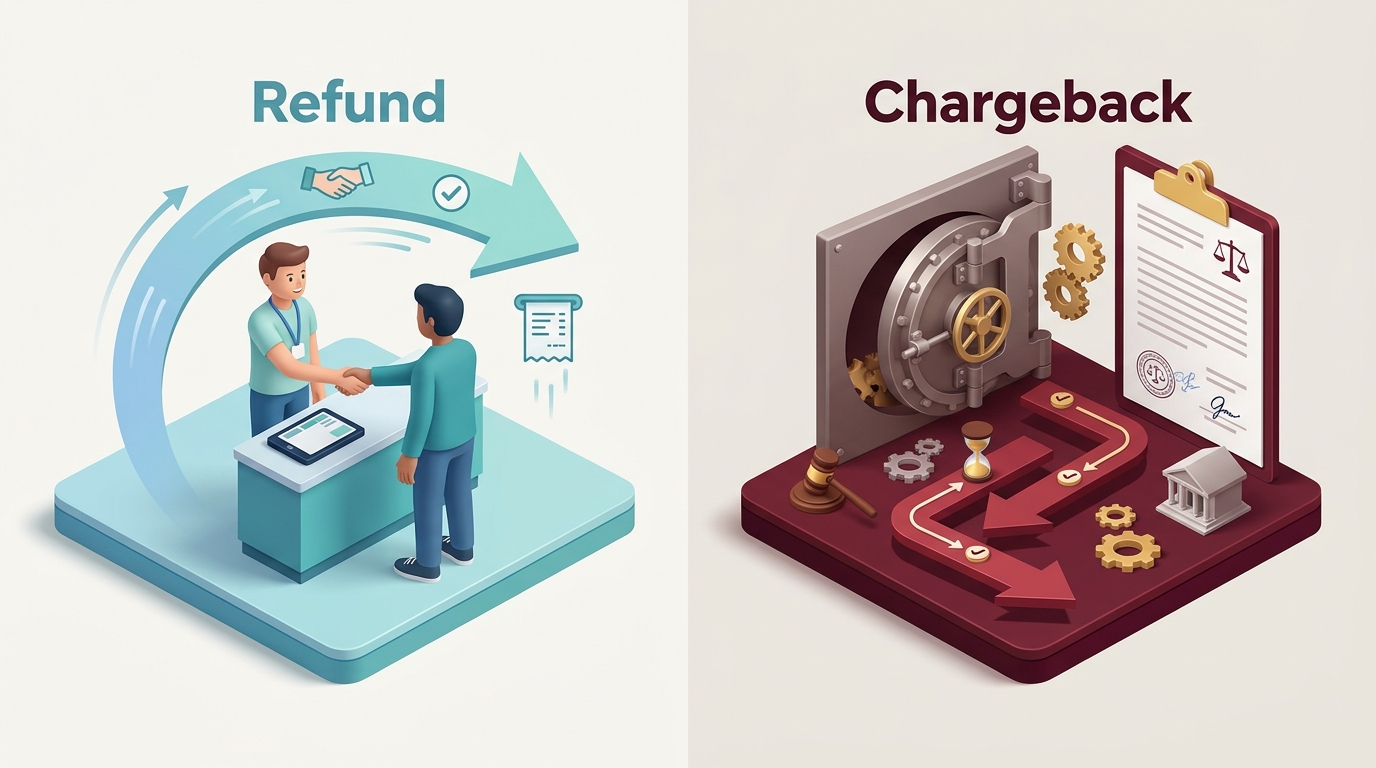
A chargeback is fundamentally a payment reversal initiated by the consumer’s bank. It is not a voluntary gesture from the merchant but a mandatory action enforced by card network rules. When a dispute arises, the credit card issuer steps in to investigate the claim. If the evidence supports the cardholder, the funds are pulled from the merchant’s account. This process provides critical financial protection for buyers in complex commercial environments.
It is crucial to distinguish between debit and credit card mechanisms. Credit card chargebacks typically involve the bank covering the loss temporarily while investigating the merchant dispute. Debit card reversals, however, directly affect your bank account balance immediately. This distinction matters because debit cardholders may lose access to those funds during the investigation period.
Chargeback vs. Refund: Key Differences
While both outcomes return money to you, the underlying processes differ significantly. A refund is a cooperative act where the merchant voluntarily returns your money after processing your request. A chargeback, conversely, is an adversarial process where the bank forces the reversal based on dispute resolution protocols.
| Feature | Refund | Chargeback |
|---|---|---|
| Initiator | Merchant (voluntary) | Cardholder (via bank) |
| Speed | Faster (days) | Slower (weeks/months) |
| Impact on Merchant | Normal business operation | Potential penalty fees |
| Basis | Customer service policy | Card network rules |
If you encounter unexpected account restrictions during this time, it may signal broader security concerns. For instance, if your card is locked due to suspicious activity related to a disputed transaction, knowing how to fix frozen bank card issues is vital. You can learn how to fix frozen bank card to ensure you retain access to your funds while the dispute is resolved.
Pro Tip: Always attempt to resolve issues directly with the merchant first. Initiating a chargeback immediately for a simple billing error can strain your relationship with the merchant and potentially slow down the resolution process.
Understanding these definitions helps you make informed decisions. You will know exactly when to ask for a refund and when to escalate to a formal unauthorized transaction claim. This knowledge empowers you to protect your financial interests effectively.
Common Reasons for Dispute Transaction Chargebacks
Understanding why a payment reversal occurs is essential for both consumers and merchants in the banking ecosystem. Disputes rarely happen without cause, and most stem from specific, identifiable triggers. These triggers generally fall into three main categories: fraud, billing errors, and product discrepancies.
While the credit card issuer manages the technical side of the reversal, the underlying reason dictates how the case is handled. It is important to distinguish between malicious intent and simple administrative mistakes.
Fraudulent vs. Friendly Fraud
The most severe type of dispute involves unauthorized transaction attempts where criminals steal card details. However, a significant portion of fraud is “friendly fraud,” where a customer makes a legitimate purchase but later disputes it to avoid paying.
-
- True Fraud: The cardholder did not authorize the charge, often due to stolen data.
- Friendly Fraud: The cardholder authorized the purchase but claims they did not receive the goods or service.
Pro Tip: If you suspect friendly fraud, merchants should retain detailed records of communication and delivery confirmation. This evidence is critical during dispute resolution to prove the transaction was valid.
Beyond fraud, administrative errors are frequent triggers for merchant dispute cases. These are usually resolved quickly once the bank verifies the account details.
-
- Double Charges: A card is charged twice for a single transaction due to a processing glitch.
- Billing Errors: Incorrect amounts, currency conversion issues, or duplicate line items appear on the statement.
- Subscription Cancellations: A user cancels a service but continues to be billed for subsequent periods.
Finally, product-related issues form the largest category of consumer-initiated disputes. These scenarios often hinge on the specific card network rules regarding delivery and description accuracy.
-
- Goods Not Received: The order was shipped but never arrived, or was lost in transit.
- Not As Described: The item received differs significantly in quality, size, or functionality from the product listing.
| Category / Scenario | Timeline / Key Factor | Action Required |
|---|---|---|
| Fraud / Unauthorized | Immediate upon discovery | Financial protection activated; card reissued |
| Billing Error / Double Charge | Within 60 days of statement | Verify transaction ID with issuer |
| Goods Not Received | After expected delivery date | Check tracking; file dispute if missing |
| Not As Described | Upon receipt of item | Document discrepancies; contact merchant first |
Each scenario requires a different approach under card network rules. For instance, fraud claims usually result in an immediate payment reversal, while billing errors may require manual adjustment by the merchant before a formal chargeback is initiated. Consumers should always review their statements for these common triggers to ensure timely action.
The Step-by-Step Bank Chargeback Process
Understanding what is a chargeback is only the first step; knowing how the machinery works is equally vital. The process is a structured sequence governed by strict card network rules. It begins when a cardholder initiates a dispute, triggering a automated review by the credit card issuer. This ensures that every merchant dispute is handled fairly and efficiently for all parties involved.
The journey from complaint to resolution follows a rigid path. First, the bank notifies the merchant of the pending payment reversal. The merchant then has a specific window to respond with evidence. If they fail to act, the issuer typically finalizes the reversal in the cardholder’s favor. This multi-stage approach balances the need for financial protection with the merchant’s right to defend their business practices.
Timeline and Deadlines
Time is the most critical factor in dispute resolution. Each stage has a strict deadline, usually measured in business days. Missing these windows can result in an automatic loss for the merchant. For consumers, understanding these timelines helps set realistic expectations for when their funds will be reinstated.
Here is a general overview of the standard processing times:
| Category / Scenario | Timeline / Key Factor | Action Required |
|---|---|---|
| Initial Dispute | 1–3 Days | Cardholder files claim; issuer sends notice to merchant. |
| Merchant Response | 7–30 Days | Merchant submits evidence to counter the unauthorized transaction claim. |
| Pre-Arbitration | 10–15 Days | Issuer reviews evidence; may request more info from either party. |
| Final Decision | 1–3 Days | Payment reversal is executed or denied based on card network rules. |
The role of the card network, such as Visa or Mastercard, is central to this flow. They act as the referee, enforcing the card network rules that dictate how evidence is weighed. They do not judge the merits of the case but ensure procedural compliance. This neutrality helps maintain trust across the global payment system.
Merchants retain the right to represent, or counter-dispute, the initial claim. They can provide proof of delivery, cancellation policies, or customer communication logs. This evidence must be compelling and directly address the reason for the billing error or fraud claim. If the merchant’s evidence is weak, the credit card issuer will likely uphold the chargeback.
Pro Tip: Keep digital records of all transactions, including IP addresses and email confirmations. Having this data ready can significantly shorten the dispute resolution timeline and improve your chances of a successful representation.
While this process protects consumers, it also demands organization from everyone involved. Whether you are managing personal finances or running a business, awareness of these steps is crucial. For instance, if you are also managing long-term financial planning, understanding how funds flow and are protected is key. This ties into broader financial literacy, such as understanding how what is 401k vesting schedule works to secure your retirement assets.
Ultimately, the step-by-step nature of the chargeback process ensures clarity. It prevents arbitrary reversals and gives both sides a fair chance to present their case. By following the card network rules strictly, the system maintains integrity in electronic commerce.
How to File a Successful Chargeback
Filing a dispute is not a “shoot first, ask questions later” scenario. Banks and card network rules often require proof that you attempted to resolve the issue directly with the seller.
Start by contacting the merchant or service provider. Explain the problem clearly and request a refund or replacement. This step establishes a paper trail showing good faith.
If the merchant refuses to help or fails to respond within a reasonable timeframe, you can proceed to your bank. Documentation is the backbone of any successful dispute resolution. Without solid evidence, your claim may be denied quickly.
Documentation Checklist
Gather all relevant records before initiating the formal process. Organizing these files in advance speeds up the review and strengthens your case for financial protection.
-
- Original receipts or order confirmations showing the date, amount, and item description.
- Communication logs including emails, chat transcripts, or call summaries with the merchant.
- Product images or screenshots if the item is defective or different from the description.
- Proof of delivery or non-delivery, such as tracking numbers or carrier statements.
- Bank statements highlighting the specific transaction date and amount.
When contacting your bank’s dispute department, be direct and factual. Provide the transaction date, amount, and a concise summary of why the unauthorized transaction or billing error occurred.
Avoid emotional language. Stick to the facts supported by your documentation. The representative will guide you through the specific forms required by your credit card issuer.
Pro Tip: Keep a personal copy of every document you submit. If the bank requests additional proof later, having this archive ready prevents delays in the payment reversal process.
Understanding the merchant dispute landscape helps you set realistic expectations. Most standard disputes are resolved within 10 to 20 business days. Complex cases involving fraud may take longer.
Stay proactive but patient. Check your email and bank portal regularly for status updates. Promptly respond to any requests for additional information to keep the process moving smoothly.
| Action Item | Why It Matters |
|---|---|
| Contact Merchant First | Demonstrates good faith; often required by networks. |
| Save All Proof | Essential for proving the billing error or defect. |
| Track Communication | Creates a timeline if the case escalates. |
By following these steps, you maximize your chances of a favorable outcome. A well-prepared file signals seriousness and makes it easier for the bank to rule in your favor.
Impact on Consumers and Merchants
Chargebacks disrupt the financial stability of both parties involved in the transaction. While consumers receive immediate financial protection, merchants often face significant operational and monetary consequences. Understanding these ripple effects is crucial for maintaining healthy banking relationships.
Consumer Implications
For cardholders, a successful payment reversal restores funds instantly to the account. However, banks closely monitor customer behavior to identify patterns of abuse.
- Frequent disputes may trigger internal reviews by the credit card issuer.
- Repeated unauthorized transaction claims without valid proof can lead to account closure.
- Excessive filing may result in being blacklisted from obtaining new cards in the future.
Pro Tip: Only dispute genuine billing error cases. Filing frivolous claims to keep a product while retaining the money constitutes fraud and can result in legal action.
Merchant Consequences
Merchants bear the brunt of card network rules that favor consumer protection. Losing a merchant dispute creates a direct financial hit beyond the original sale amount.
| Impact Area | Consequence |
|---|---|
| Direct Fees | Typical chargeback fees range from $15 to $25 per incident. |
| Cash Flow | Funds are held temporarily, disrupting inventory purchasing and payroll. |
| Risk Scores | High dispute rates increase processing fees or lead to termination of payment services. |
When a merchant’s dispute resolution rate exceeds industry thresholds, payment processors may impose higher monthly fees or suspend accounts entirely. This disruption can halt business operations for days or weeks. Consequently, businesses must implement robust fraud detection and clear return policies to mitigate these risks.
Both sides must approach disputes with transparency. Consumers should document evidence thoroughly, while merchants should maintain clear communication records. This balance ensures the financial protection mechanisms function as intended without causing undue harm to legitimate business operations.
Frequently Asked Questions
Q: How long does a chargeback take to process?
Most bank chargeback processes are completed within 30 to 45 days, though complex cases can extend up to 90 days. The timeline includes initial review by your credit card issuer, evidence submission from the merchant, and final arbitration by the card network. You will typically receive a temporary credit to your account within a few days of filing, which becomes permanent only after the dispute resolution concludes.
Q: Can a bank deny my chargeback request?
Yes, a bank may deny your claim if you lack sufficient evidence or if the transaction falls outside valid grounds for payment reversal. Common reasons for denial include failing to dispute the charge within the required timeframe or providing proof that you accepted the goods or services. It is crucial to review the specific card network rules to ensure your claim aligns with defined dispute categories.
Q: What happens if I win a chargeback dispute?
If you prevail, the merchant must return the disputed amount to you, and you will be permanently credited for the full value of the unauthorized transaction or billing error. This outcome provides essential financial protection, ensuring you are not liable for charges you did not authorize or services that were not delivered as agreed. The funds usually appear in your account within one or two billing cycles after the final decision.
Q: Is a chargeback the same as a refund?
No, a refund is a voluntary return of funds initiated by the merchant, whereas a chargeback is a formal payment reversal forced by your bank through the card network. While both result in money returning to your account, a chargeback involves a structured dispute resolution process and is typically used when a merchant refuses to cooperate or acknowledge a billing error. Using a chargeback when a simple refund is available may strain your relationship with the retailer.
Q: Can I file a chargeback for a debit card purchase?
Yes, you can dispute debit card transactions, but the process differs slightly from credit card claims because the money is withdrawn directly from your checking account. Banks generally provide a temporary credit while investigating the merchant dispute, but you may need to provide more documentation to prove the unauthorized transaction or service failure. Be aware that frequent debit card disputes can sometimes trigger additional security reviews by your financial institution.

Conclusion
Understanding the mechanics of dispute resolution is essential for maintaining financial security in today’s digital economy. As you have learned, a chargeback is not merely a refund but a formal process initiated by the cardholder’s bank to reverse a transaction, typically due to billing errors, unauthorized activity, or goods not as described. This mechanism serves as a critical safety net, ensuring that consumers are protected against fraudulent or unfair practices while balancing the interests of merchants. Key takeaways include recognizing that chargebacks differ significantly from standard refunds, which are voluntary reversals granted by sellers. Furthermore, it is vital to understand the timeline involved, as these disputes can take weeks or even months to resolve, impacting cash flow for businesses. For consumers, keeping detailed records of transactions and communications is your best defense and strongest evidence if a dispute arises. By knowing exactly what is a chargeback and when to use it, you empower yourself to navigate complex financial situations with confidence and clarity. Your financial literacy is your greatest asset, so stay informed and proactive in managing your accounts. We would love to hear your experiences with transaction disputes in the comments below, or explore our other guides on credit card security to further enhance your financial knowledge.
Disclaimer: This guide is intended for informational and educational purposes only and does not constitute formal legal, financial, or tax advice. Always consult with your institution or a qualified professional for individual guidance.